
Most winters in Brevard we get one stretch of hard cold that exposes every weak heat pump in town, and the calls from the West End come in waves right behind it. A heat pump not heating usually traces back to a short list of suspects: a clogged filter, a thermostat problem, a tripped breaker at the outdoor unit, signs of low refrigerant from a slow leak, a failed defrost control, or a reversing valve stuck in cooling mode.
Some of those you can check yourself before you ever pick up the phone. The rest need gauges, a meter, and somebody who has done this a few thousand times. Our team has been running these calls in Transylvania County since 1990, and the pattern barely changes from one winter to the next. Airflow problems and backup heat problems matter more than everything else in this article combined, so we spend the most ink there.
Start With Airflow, Then the Thermostat
Airflow is the first thing to rule out, because a heat pump that can’t move air can’t move heat, no matter how healthy the refrigerant circuit is. A filter that has gone three or four months without a change will choke the air handler, drive the coil past its temperature limits, and make the whole system short cycle. Regular air filter changes are something we can’t stress enough; we have pulled filters out of West End cottages that looked like gray felt blankets. Start there. Costs nothing.
Then the thermostat. Sounds insulting, we know, but a surprising share of no-heat calls end with a thermostat set to cool, a dead battery, or a schedule somebody’s grandkid programmed and nobody can undo.
Check that the display is alive, the mode says heat, and the setpoint is actually above room temperature. While you’re standing there, listen for the click when you raise the setpoint. If the thermostat clicks and nothing downstairs or outside responds, you have narrowed the problem considerably, and that’s worth telling whoever answers our phone.
The Outdoor Breaker Trick That Fools Everybody
A heat pump has two breakers: one for the air handler inside, one for the condenser outside, and here is where homeowners get fooled. If only the outdoor breaker trips, the indoor blower keeps running and pushes room-temperature air through the vents. Feels like the system is working. It is not heating anything. It is just stirring.
Go look at the panel and check both. Some houses also have a disconnect box mounted on the wall next to the outdoor unit, and we have found more than one of those with a pulled fuse block after a homeowner did some pressure washing or a landscaper bumped it.
Reset a tripped breaker once. If it trips again, stop. A breaker that won’t hold is protecting something, usually a compressor or a shorted heat strip, and every reset after the first one is a gamble with the most expensive part in the system.
Refrigerant Problems Never Announce Themselves
If the airflow and electrical basics check out, you’re into the territory where we earn our living: refrigerant charge, the defrost board, the reversing valve, a failed run capacitor, a contactor with pitted points. The ugly part is that low refrigerant almost never announces itself. The system limps along for weeks, running longer and longer cycles, and the heating bill spikes in winter quietly before the heat ever fully quits. We don’t guess at charge on those calls. We measure it.
A weak run capacitor gives more warning than a leak does. You get a hum at the outdoor unit, a hard start, a fan that tries twice before it catches. The part itself is cheap; the last one we stocked on the truck cost less than a dinner out in downtown Brevard.
What is not cheap is a compressor that has been starting against a dying capacitor for two months. Same story with a pitted contactor, which chatters, arcs, and eventually welds itself closed so the unit never shuts off. All of it shows up on a meter long before it shows up as a cold house.
Heat Pump Not Heating, could be defrost?
A defrost cycle is a normal heat pump function that briefly reverses the system into cooling mode to melt frost off the outdoor coil, and it’s behind more panicked winter phone calls than any actual failure. During defrost, the outdoor fan stops, the unit may hiss or whoosh, steam rolls off the coil like something caught fire, and the indoor vents blow cool air for several minutes. Every bit of that’s by design.
On a damp, cold night in Pisgah Forest, a heat pump might defrost several times and be perfectly healthy. According to Consumer Reports, modern heat pumps handle cold-climate conditions far better than their reputation suggests.
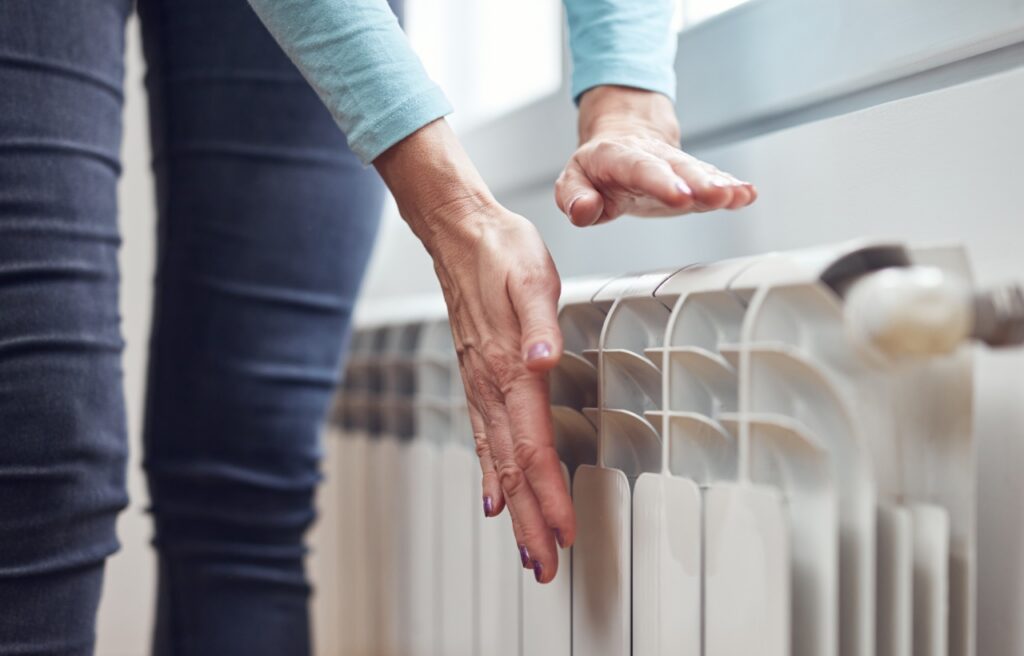
Heat pump air also runs cooler than furnace air even when everything is working. A gas furnace can push air at well over a hundred degrees; a heat pump on a cold morning might deliver air in the low nineties.
Hold your hand at the vent and it can feel lukewarm, almost cool, while it’s still warming the house just fine. Folks who moved here from houses with gas heat call us about this every single winter.
When Defrost Fails and the Unit Turns Into an Igloo
The trouble starts when defrost fails. A bad defrost board or a failed sensor lets ice build until the outdoor unit turns into a solid white block, and at that point the coil can’t pull heat from the air at all. If your outdoor unit looks like an igloo, that’s not a defrost cycle. That’s a service call.
Light frost on the coil fins is normal and expected. A shell of ice that survives a full day, or ice that comes right back after you shut the system off and let it thaw completely, is not.
We also see ice building up from the bottom of the unit when the base pan drain holes clog with leaf litter, which is practically a local specialty given what October does around here. Meltwater refreezes in the pan, the ice climbs into the fan blade, and the blade destroys itself. Keep the pad clear and the leaves raked back.
Heat Pump Not Heating: Run This Checklist Before You Call Anybody
Change or check the filter: if you can’t remember the last time you changed it, that’s your answer. Confirm thermostat mode and batteries: heat mode, setpoint above room temperature, display alive. Check both breakers and the outdoor disconnect: the outdoor breaker trips more often than the indoor one. Look at the outdoor unit: light frost is normal, a solid ice shell is not. Clear the clearance around the condenser: rhododendron and laurel grow fast up here, and we have pulled service panels that were pinned shut by a bush somebody planted two springs ago. Feel the air at a supply vent: lukewarm is normal for a heat pump; genuinely cold air on a call for heat is not. Listen at the outdoor unit: humming without the fan spinning, clicking without starting, or dead silence while the indoor blower runs are all worth reporting.
If everything on that list passes and the house is still cold, stop resetting breakers and call. Repeated resets on a unit with a real electrical fault can turn a modest repair into a compressor replacement.
Heat Pump Not Heating on Cold Nights
Backup heat is the piece most West End homeowners don’t know they have, or don’t know they are missing. As outdoor temperatures fall toward the low twenties, a standard heat pump loses capacity, and the auxiliary heat strips in the air handler are supposed to pick up the slack.
If those strips have failed (or were never installed, which we still find in older systems), the house will hold sixty-something degrees on a cold snap night and not budge. The system is not broken exactly. It is out of muscle.
The HVAC airflow issues raised in the first section matter here again, because a starved blower makes the capacity problem worse at the exact moment you need every bit of output.
A heat pump fighting a felted filter at 18 degrees outside is losing on both ends. This is also why we push tune-ups in the fall rather than January, a solid winter HVAC maintenance checklist catches failed heat strips on a mild afternoon rather than the first hard night, along with everybody else in the county.
By the MAC Heating & Air Conditioning, Inc. Team
Frequently Asked Questions about Heat Pump Not Heating
Why is my heat pump running but not heating the house?
A heat pump that runs without heating is most often caused by a tripped outdoor breaker, leaving the indoor blower circulating room-temperature air while the outdoor unit sits completely dead. Check both the main panel and any disconnect box mounted beside the outdoor condenser. If the breakers are fine, the next most common causes are a filter clogged enough to block airflow, a thermostat left in cooling mode, or a reversing valve stuck in the cooling position. Reset a tripped breaker once only; if it trips again, call a technician before resetting it a second time.
At what temperature does a heat pump stop working effectively?
Most standard heat pumps lose efficiency rapidly below about 35 to 40 degrees Fahrenheit and may struggle to maintain setpoint on their own below that range, which is why backup or auxiliary heat exists. Modern cold-climate heat pumps extend useful operation further, but even standard systems serve most Brevard winters adequately when the refrigerant charge is correct and airflow is unobstructed. If the outdoor unit is iced over solid rather than showing light frost on the fins, the system has a defrost failure rather than a low-temperature limitation.
Is it normal for a heat pump to blow lukewarm air in winter?
Yes, a heat pump delivering air in the low 90-degree Fahrenheit range at the vent is operating normally. Unlike a gas furnace, which can push supply air well above 100 degrees, a heat pump transfers heat rather than generating it, so the air it delivers feels noticeably cooler by comparison. If the air at the vent feels closer to room temperature than warm, and the outdoor unit is running, suspect low refrigerant charge or a defrost system failure rather than a thermostat or airflow issue.